By Dr. Brittany Jacobs | 12/30/2025
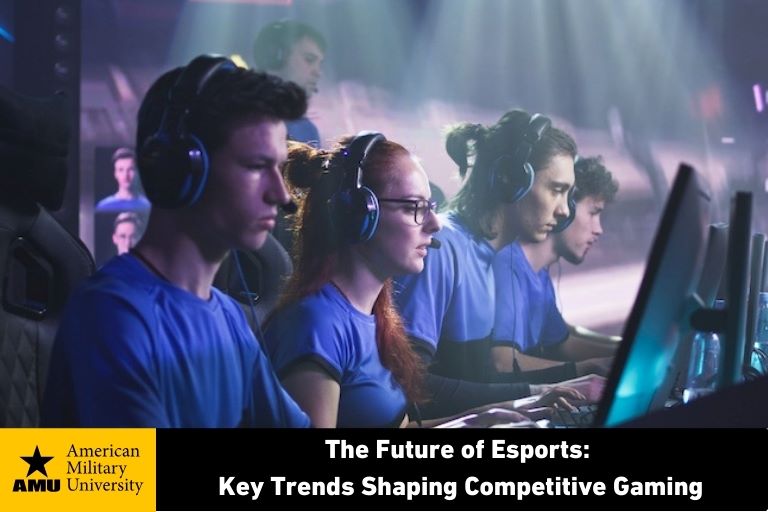
Competitive video gaming, or esports, began as a hobby and has grown into a $2.13 billion global industry. To understand the future of the esports gaming industry, however, we first need to look back.
The first professional esports tournament in the United States was the Spacewar! Tournament in 1972, hosted at Stanford University. At the time, the prize for winning the tournament was a subscription to Rolling Stone magazine. Today, the prize pool for a major esports title such as League of Legends is $5 million.
Esports Growth and the Evolution of a Global Phenomenon
The popularity of esports exploded in China and South Korea in the late 1990s. With the increased accessibility of personal computers and the life-changing creation of the internet, PC bangs (internet cafes) in South Korea became the training ground for future professional esports teams. These spaces facilitated community while creating a social and competitive environment for esports participation.
Today, esports continue to become mainstream with publishers and tournament organizers launching new leagues and competitions. In addition, major professional sports leagues, like the National Basketball Association (NBA®), now co-own esports leagues. In the case of NBA 2K, the NBA and Take-Two Interactive (the game’s publisher) co-own the league.
The global esports audience has experienced rapid growth, reaching 641 million viewers, according to Robert Lee of SQ Magazine. Lee also notes that esports revenue has increased by 16% since 2024. Major titles like Rocket League® and Counter-Strike: Global Offensive® (CSGO) generate millions of dollars for their publishers, Epic Games and Valve.
In addition, major sports media outlets – like ESPN – now cover esports. ESPN has even covered various world championships, such as the League of Legends world championship tournament.
Community Esports Players and Esports Training
From a playing perspective, there are now true pathways to play esports professionally, beginning with high school students and continuing through collegiate esports programming. Over 8,000 high schools now offer esports as an extracurricular opportunity alongside traditional sports teams; these co-ed teams include both male and female esports players.
High-performing high school esports players then compete for collegiate scholarships as college and university esports teams continue to formalize. National associations are also working to support professional esports organizations and help professional esports players navigate the changing marketplace.
The recreational side of esports is also growing as schools integrate community-level esports into education. Both are methods of gamifying various subjects, and esports is an extracurricular activity that builds teamwork and creates a sense of belonging.
Working in the Esports Industry
Careers in esports have also evolved as the esports ecosystem has become more professional and expanded beyond a pop culture trend. Esports now include not only esports athletes but the opportunity to pursue job opportunities in team management, coaching, broadcasting, and marketing. With such growth and change in the esports landscape, we must ask ourselves, “What’s next?”
Technology Advancements Driving Esports Growth
While we cannot predict the future and may not foresee all the ways the esports industry will grow and change over time, technological advancements and adoption will certainly play a central role.
As esports organizations attract global audiences and appear at major events, technology has become a key factor shaping long-term growth of this sport. From boosting esports performance to enhancing player and fan involvement, advanced technology will redefine how players train and event organizers operate.
Technology can influence audience accessibility, increasing prize structures and, in turn, the success of top publishers like Riot Games® and Activision Blizzard®. It will also lead to new opportunities across the esports ecosystem related to artificial intelligence (AI), blockchain, mobile gaming, and esports betting.
Artificial Intelligence, Machine Learning, and Competitive Esports
Artificial intelligence and machine learning (ML) are evolving rapidly and will play a significant role in the esports industry. AI and ML tools are integral to optimizing player performance in esports training.
For instance, AI and ML helps identify patterns and best practices to support professional players’ training. AI can also help with content creation and broadcasting, improving the esports fan experience.
Blockchain and the Esports Industry
The connection between esports games and blockchain will create opportunities for digital ownership of in-game assets. No longer will esports skins, weapons, and characters accumulated or developed in a favorite game be relevant only during play. Now, a player will have the opportunity to truly own an asset. These assets may be sold or traded, facilitating monetization from their own esports participation.
Mobile Games and the Esports Market
Console and PC games have long dominated the esports community, but mobile devices and gaming are poised to take the market by storm. Today, 56% of esports audiences view esports competitions and content from mobile devices. The mobile gaming market has grown significantly as access to cell phones has increased worldwide.
Once limited by the cost of purchasing a console or PC, gamers worldwide are now accessing the esports marketplace on their mobile devices. In fact, 91% of the world’s population now has a cell phone.
Such ubiquitous adoption has led to an increase in mobile esports. Publishers are now developing new games or modifying existing games to be more mobile-friendly, leading to games like PUBG Mobile becoming among the most successful mobile games of all time.
Many of the mobile esports games may not be considered esports by traditionalists. Certain games, like Monopoly Go!®, are more casual and allow amateur players to be social while appealing to a broad audience.
Most of these games are free to play, offering in-app purchases or advertisements to generate revenue. This model reduces the barrier to entry compared to traditional sports and esports, creating video games that appeal to a wide audience. Increased cell phone access and the rise of free mobile games are key trends that will shape the future of esports.
The adoption of mobile gaming also expands publishing companies’ access to other markets. These markets include:
- Latin America
- Southeast Asia
- The Middle East
- North Africa
Esports Betting and Major Esports Events
The growth of esports will further expand the esports gambling marketplace. As esports are now featured alongside major traditional sports in the media, they are also positioned as equals within the sports betting space.
Betting companies are particularly interested in the esports audience as its demographics are trending younger, creating an opportunity for long-term customers and a sustainable revenue stream. Additionally, esports fans are typically tech-savvy, making it easy for them to adopt new betting applications.
The Bachelor of Science in Esports at AMU
For adult learners interested in gaining more knowledge of modern esports, American Military University (AMU) offers an online Bachelor of Science in Esports. Taught by experienced faculty members, students can take courses in esports events and facility management, the business of esports, and contemporary issues in esports. Other courses include esports media and production, policy regulations and the esports ecosystem, and an externship in esports.
This degree features two concentrations, allowing students to choose the concentration goals that best suits their professional aspirations:
- Esports coaching and athlete development
- Esports business administration
Also, this bachelor’s degree has received specialty accreditation from the Commission on Sport Management Accreditation (COSMA®). As a result, the courses in this program have been professionally examined to conform to high academic standards.
For more information about this bachelor’s degree, visit AMU’s health sciences degree program page.
NBA is a registered trademark of the NBA Properties. Inc.
Rocket League is a registered trademark of Psyonix, LLC.
Counter-Strike: Global Offensive is a registered trademark of the Valve Corporation.
Riot Games is a registered trademark of Riot Games, Inc.
Activision Blizzard is a registered trademark of Activision Blizzard, Inc.
Monopoly Go! is a registered trademark of Hasbro, Inc.
COSMA is a registered trademark of the Commission on Sport Management Accreditation.
Dr. Brittany Jacobs is an Associate Professor and Department Chair for the sports management and esports programs at American Military University. She is highly involved in the Olympic and Paralympic movements and worked for USA Rugby before returning to academia. Much of her current research centers around officials and other marginalized populations providing a direct connection to her previous coaching and officiating experiences.
Brittany holds a master’s degree in sports management from the University of Texas, a master’s degree in secondary education from the University of New Hampshire, and a B.S. in kinesiology from the University of New Hampshire, where she also played collegiate field hockey. She earned her Ph.D. in sports & exercise science with a doctoral minor in statistics from the University of Northern Colorado.